If someone says they can spray a treatment on an older roof and help it perform better, it’s fair to ask how that is supposed to work. Roofs are expensive, mistakes are expensive, and the home-improvement world has plenty of products that sound better in the pitch than they look under scrutiny. A good roof rejuvenator shouldn’t need mystery to make sense. It should be able to explain the material problem it is trying to address.
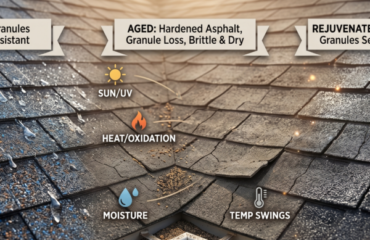
For asphalt shingles, the problem is aging in the asphalt system. The shingles can dry out, stiffen, lose flexibility, and stop holding granules as well as they did when they were newer. A treatment worth taking seriously should be aimed at those issues. It should not be sold as a magic spray for leaks, storm damage, rotten decking, or every roof material under the sun.
Why People Are Skeptical
If you have gone looking around online, maybe you have seen Reddit threads or contractor forums where people call roof rejuvenation “snake oil.” We get it. Some of those comments are not coming from nowhere. This category has had its share of big promises, vague chemistry, and sales pitches that make it sound like a tired roof can be sprayed into immortality. That kind of thing deserves skepticism.
We are not going to link those threads here or name specific companies. Not because they are hard to find. They are not. More because some folks in this category seem to enjoy lawyerly conversations almost as much as roofing conversations, and we would rather spend our time talking about the chemistry. The important point is this: APEX 1132 was not the product those older “snake oil” takes were reacting to. It was not built around the old “trust us, it is a roof tonic” version of the category. It is chemically different. It was designed specifically around asphalt shingles, what happens to them as they age, and how to help restore useful performance without pretending every roof can be rescued.
What Engineered Means Here
“Engineered” can become a throwaway word if nobody explains it. For APEX 1132, it means the chemistry was designed for asphalt shingles. Not wood. Not concrete. Not metal. Not a flat membrane. Not fuel. Asphalt shingles.
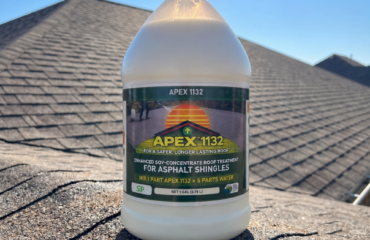
APEX 1132 is derived from soybean oil chemistry, but it is not the same thing as ordinary soybean oil poured on a roof. It also isn’t simply standard epoxidized soybean oil. The chemistry is tuned so it has useful reactivity while still being compatible with the asphalt shingle system. In plain English, the molecule was adjusted so it can work with aged asphalt rather than just sitting there as a generic oil.
More Than Making The Roof Look Darker
Some roof products are mostly surface treatments. They may darken the roof or make it look refreshed for a while, and appearance can matter to homeowners. But appearance by itself is not the interesting part of roof rejuvenation.
APEX 1132 is designed to interact with the aged asphalt binder. The goal is to help restore flexibility-related behavior and support better bonding between the asphalt binder and the mineral granules. That binder-granule relationship matters because granules protect the asphalt from sun and weather. When aged asphalt holds granules poorly, the roof can start losing more of that protective surface.
So when we talk about an engineered rejuvenator, we are not just talking about a roof looking darker from the driveway. We are talking about a treatment intended to work with the shingle material itself, especially the parts of the shingle that change as asphalt ages.
Flexibility, Grit, And Flame-Spread Language
Shingles are always dealing with movement. They heat up, cool down, expand, contract, get lifted by wind, get hit by rain, and sit through all the small movements of the building below them. A flexible shingle handles that world better than a brittle one. When aging asphalt becomes stiff, cracks, breaks, and granule loss become more likely under stress.
Grit retention is one of the most visible performance areas because homeowners can often see granules in gutters or near downspouts. In abrasion testing, even a new shingle can lose some granules. With APEX 1132 applied to a new shingle, the treated shingle retained 99.9% of its grit. That doesn’t mean every new roof needs treatment immediately, but it does say something useful about how well the chemistry fits asphalt shingles.
Spread-of-flame claims also need careful wording. A roof treatment does not make a house fireproof, and it shouldn’t be sold that way. The responsible statement is about spread-of-flame performance in testing. By helping aged asphalt behave more like healthier asphalt, a rejuvenator can help recover some of the original spread-of-flame resistance behavior in the shingle system. That is very different from saying it prevents fire damage.
As a practical maintenance expectation, the improved adhesion, flexibility, and spread-of-flame results are discussed around a 5 to 6 year window before another treatment is considered. When roof replacement can cost around $20,000 or more, that maintenance window is one reason the chemistry matters.
Application Still Has To Be Right
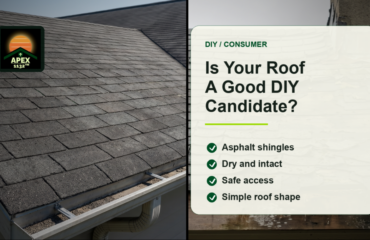
Good chemistry can still be wasted by poor application. APEX 1132 is intended for dry asphalt shingle roofs. It is mixed 1 part APEX 1132 with 5 parts water, and the finished spray is applied evenly at about 1 gallon per 200 square feet. Damaged shingles should be repaired before treatment. Wet, unsafe, dirty, damaged, or non-qualifying roofs should not be forced into the process.
Those details are not fine print. They are part of the performance story. The product has a role, but the roof still has to qualify and the application still has to be controlled.
The Practical Version
Engineered roof rejuvenators work by focusing on the real aging mechanisms of asphalt shingles: dryness, stiffness, brittleness, granule loss, and related performance changes. APEX 1132 is a soy-derived, chemically tuned treatment designed for that maintenance window before replacement becomes the only responsible path.
No magic spray. No pretending the category never had a trust problem. Just better chemistry, a clearer use case, and a more grounded way to talk about maintaining aging asphalt shingles.