DIY roof rejuvenation is not complicated in the way rewiring a house is complicated, but it still needs a real setup. The product has to be mixed correctly, applied evenly, and used on the right roof under the right conditions. The homeowner also has to work safely, which is the part that decides whether DIY belongs on the table.
The basic list is product, clean water, a sprayer that applies evenly, safety equipment, a way to estimate roof area, weather planning, and enough judgment to stop if the roof is not safe. None of that is glamorous, but it is what keeps the project from turning into a mess.
Product And Coverage
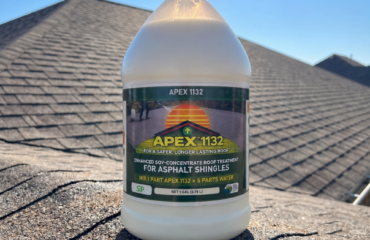
APEX 1132 is mixed 1 part product with 5 parts water. One gallon of concentrate makes about 6 gallons of finished spray. The finished spray is applied at about 1 gallon per 200 square feet. Since 1 roofing square is 100 square feet, one gallon of concentrate treats about 12 roofing squares.
Estimate roof size before buying product. If the roof is 15 squares, the product used is about 1.25 gallons of concentrate. If the roof is 20 squares, it is about 1.67 gallons. If the roof is 30 squares, it is about 2.5 gallons. Since product may be purchased in whole gallons, the amount you buy may be higher than the amount used.
Don’t guess wildly. If you underbuy, the job may stop halfway. If you overapply, you waste product and may create uneven results. If you underapply, you may reduce the benefit. Coverage matters.
Sprayer
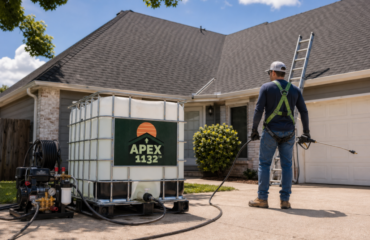
You need a sprayer that can create a controlled, even application. We generally recommend this backpack sprayer as a starting point: https://www.amazon.com/dp/B09TB8NSZY. Other sprayers may work if they provide an even coating and you verify coverage.
Before treating the roof, understand how your sprayer behaves. Know the spray pattern, how quickly it empties, whether it drips, whether it pulses, and whether it applies evenly. The target is about 200 square feet per finished gallon. A roof is a bad place to discover that your equipment has a personality problem.
If the sprayer cannot apply consistently, don’t use it. The product is part of the job, but the application is what the roof actually receives.
Water And Mixing Setup
Because APEX 1132 is mixed 1:5 with water, have clean water available and a simple way to measure. The goal is consistency. A sloppy mix can lead to inconsistent application, and inconsistent application can lead to uneven results.
Plan where mixing will happen. Think about spills, hoses, containers, and cleanup. Don’t mix in a place where a spill becomes a bigger problem than the project itself. Keep the setup boring and controlled.
Label or separate anything used for the project. Don’t leave mixed product sitting around where someone else might mistake it for something harmless. Basic organization prevents avoidable problems.
Safety Equipment
Safety equipment depends on the roof and the homeowner’s risk tolerance, but gloves, eye protection, appropriate footwear, and clothing you don’t mind getting dirty are a reasonable starting point. Roof access equipment and fall protection may be needed depending on the roof. Local requirements can vary.
Here is the blunt version: if the safety setup feels excessive, the job may not belong in the DIY column. If the safety setup feels too minimal, the roof may be trying to tell you something. Never work on a wet roof, an icy roof, a roof in high wind, or a roof that feels unstable. Saving money is not the same thing as managing risk.
Measuring And Planning The Roof
You need some idea of roof area. A contractor may measure this professionally. A homeowner can use roof documents, prior replacement quotes, satellite measurement tools, simple length-and-width estimates, or conservative calculations based on the building footprint and roof pitch. The number doesn’t have to be perfect, but it should be close enough to plan product and coverage.
Break the roof into sections before spraying. Decide where you will start, how you will move, what areas are excluded, and how you will avoid walking through treated areas. Think about valleys, edges, gutters, landscaping, siding, windows, patios, cars, and neighboring property. The roof is the target. The patio furniture did not volunteer.
Documentation
Take before photos. Photograph worn areas, areas that should not be treated, and any damage or repairs needed. Record the date, weather, product amount, mix ratio, and approximate coverage. Take after photos.
This is useful for your own maintenance records. It is especially useful if you sell the home later. You can show that the roof was evaluated, the product was applied, and the work was maintenance rather than a vague “we did something to the roof” story.
The Practical Takeaway
To apply APEX 1132 yourself, you need product, the right mix, a consistent sprayer, safe access, dry weather, a roof that passes inspection, and enough planning to apply evenly. The equipment list is approachable, which is part of the DIY appeal.
The risk is also real. If the roof is hard to access, unsafe, damaged, or confusing, the correct tool may be a phone call to someone qualified. DIY is valuable when both the roof and the homeowner are a good fit.